
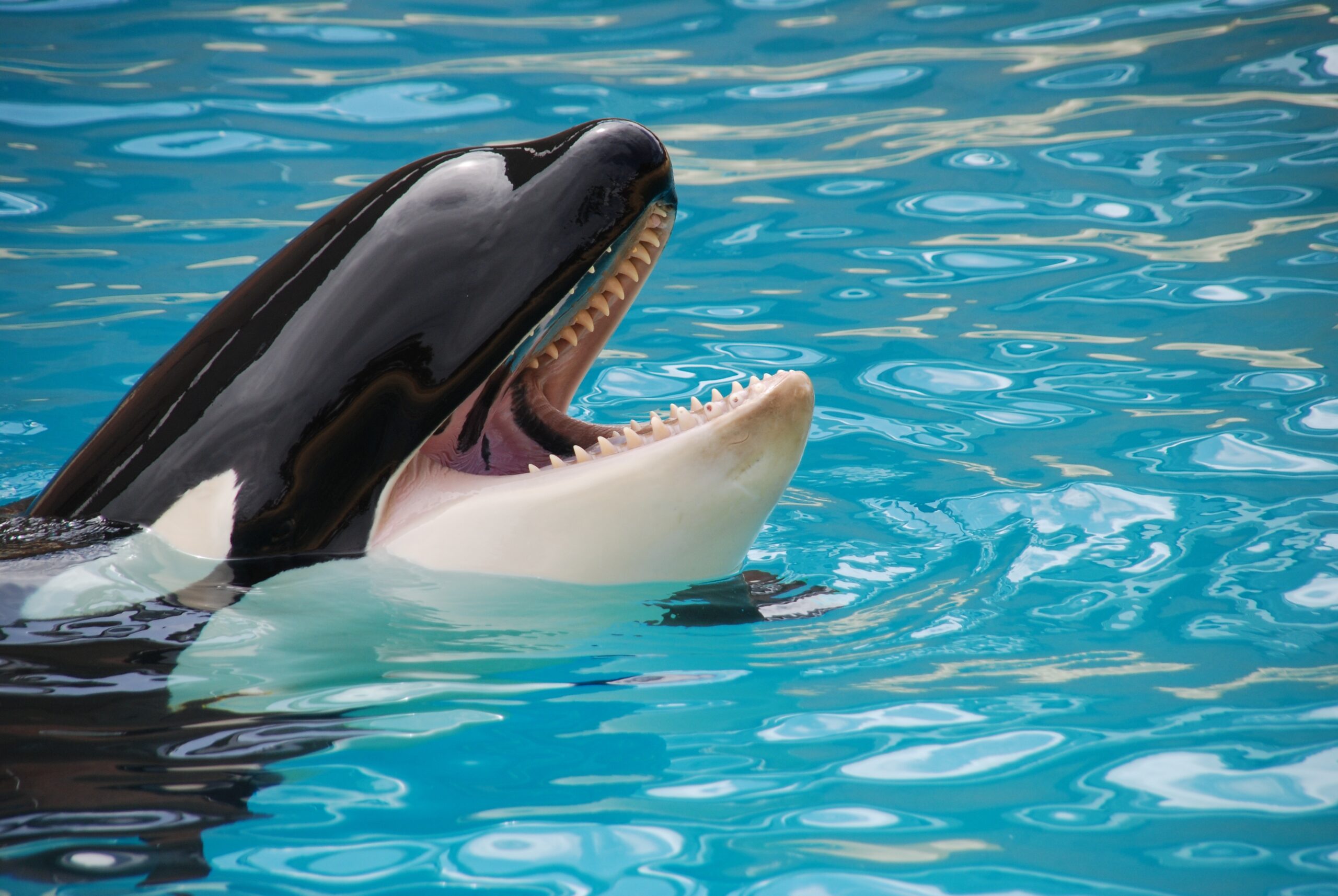
Resident killer whales have such strong social bonds that they remain with their mothers for life. Mothers care for their sons even after they become adults, sharing food with them. Females stop breeding at around 40 years of age, but live for several more decades, playing an important role as leaders and „grandmothers,“ knowing the best feeding grounds during lean years. Such a long post-reproductive lifespan is found only in humans and a few cetacean species.
Werbung
Killer whales have complex vocalizations. Each group has its own dialect—a set of specific sounds that are passed down through generations. Resident killer whales use vocalizations to maintain communication within the group, while transients use them primarily for social interaction after hunting. Research has shown that dialects can change over time, but their base remains stable for decades.
Unfortunately, killer whale populations face serious threats. Southern Resident killer whales, which live off the coast of North America, number only about 75 individuals and are endangered due to salmon shortages, pollution (high concentrations of PCBs are found in their tissues), and noise pollution from ships. Transient killer whales fare better in the North Pacific, but they also suffer from the accumulation of toxins in the food chain.
Human attitudes toward killer whales are controversial. For many years, they were considered pests and were shot. Later, the era of aquariums began, where killer whales became the stars of the show. But life in weightless pools proved devastating for these highly migratory animals: their dorsal fins become distorted, they develop diseases, and their lifespans are dramatically reduced. After the release of the documentary „Blackfish,“ public opinion shifted, and many countries banned the keeping of killer whales in captivity.
Today, killer whales have become a symbol of marine conservation. Watching them in the wild is a popular ecotourism activity, particularly in Norway, Canada, New Zealand, and Iceland. Ethical tour operators maintain social distancing and limit observation time to avoid disrupting the animals‘ behavior. For many, encountering a killer whale in its natural habitat is a life-changing experience, changing their attitude toward the ocean.
The future of killer whales depends on the health of the ocean. Protecting salmon populations, reducing pollution and noise pollution, and creating marine protected areas are all essential for the conservation of these amazing creatures. Killer whales are more than just predators; they are indicators of ecosystem health, and their well-being reflects the health of the entire ocean. By studying them, we learn to understand the complex webs of life in which we ourselves are only one link.