
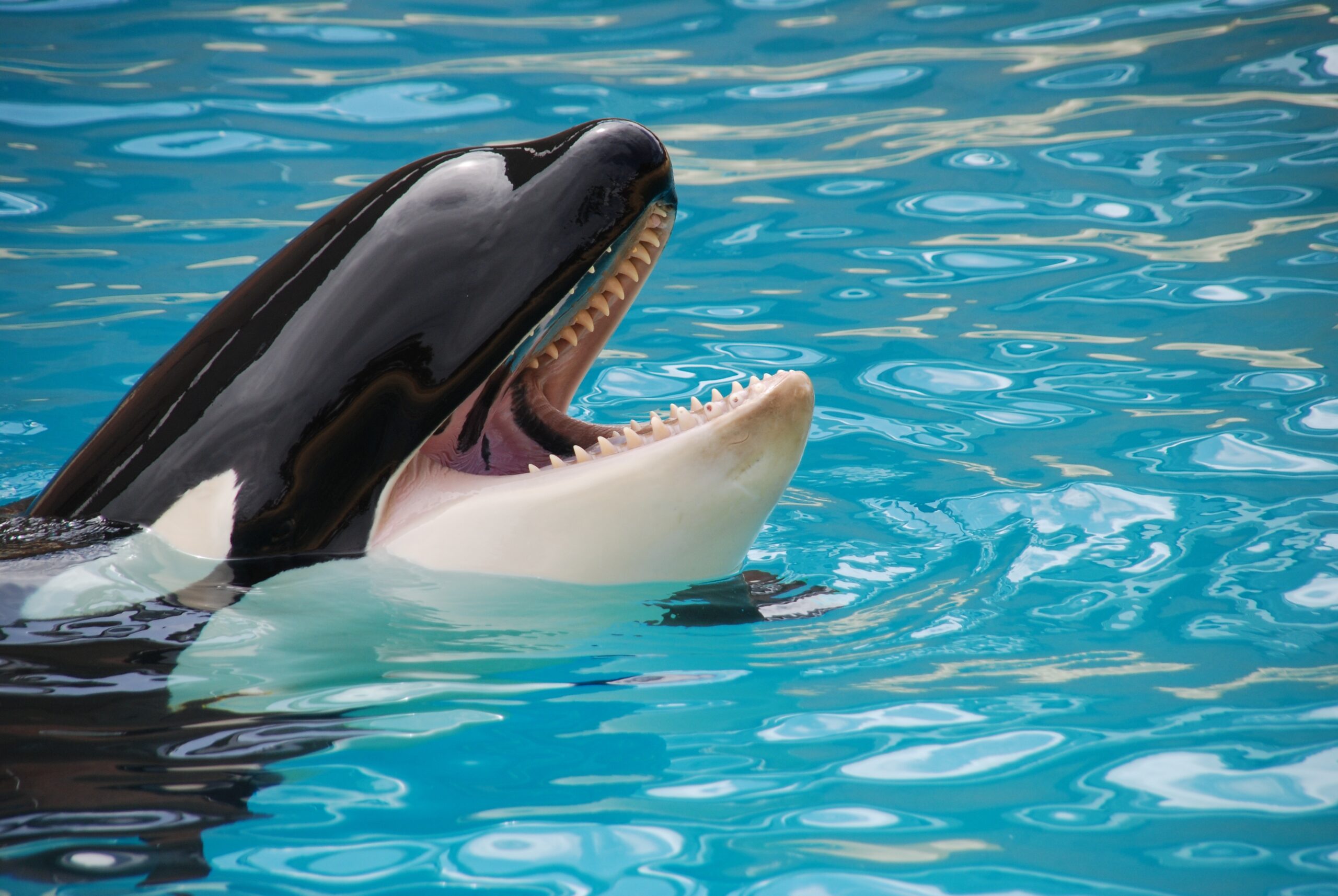
The killer whale, or Orcinus orca, is one of the most recognizable and controversial inhabitants of the ocean. Its nickname „killer whale“ derives from its historical ability to prey on other whales, but in reality, killer whales are far from ruthless monsters. They are highly intelligent, social animals with a culture passed down from generation to generation. The study of killer whales over the past half-century has revolutionized our understanding of marine mammals.
Werbung
Killer whales belong to the dolphin family and are its largest representatives: males can reach 9 meters in length and weigh up to 10 tons. Their distinctive black and white coloring serves not only as an ornament but also as camouflage—the light belly blends in with the bright surface when viewed from below, while the dark back makes them invisible to prey viewed from above. Each population has its own unique markings, which scientists use to distinguish individuals.
The most astonishing thing about killer whales is their cultural diversity. There are at least three ecotypes that do not interbreed and have distinct diets, languages, and social structures. Resident killer whales of the North Pacific feed exclusively on fish, primarily salmon, live in large, stable groups (maternal lines), and are very vocal. Transient killer whales hunt marine mammals—seals, sea lions, and even whales—moving in small groups and communicating less frequently to avoid disturbing their prey. The third ecotype, offshore killer whales, live in the open ocean and feed on sharks and rays. Their biology is the least studied.
Killer whales‘ intelligence is demonstrated in their complex hunting strategies. They employ tactics comparable to humans: they can create waves to flush seals off ice floes, herd fish into a ball near the surface and stun them with tail slaps, and coordinate attacks with precision down to the second. In Antarctica, some killer whales have mastered the „beach hunt“ technique: they beach themselves to snatch a seal pup and then slip back into the water. This skill requires training and practice, and is passed down from mother to calf.